
penguins
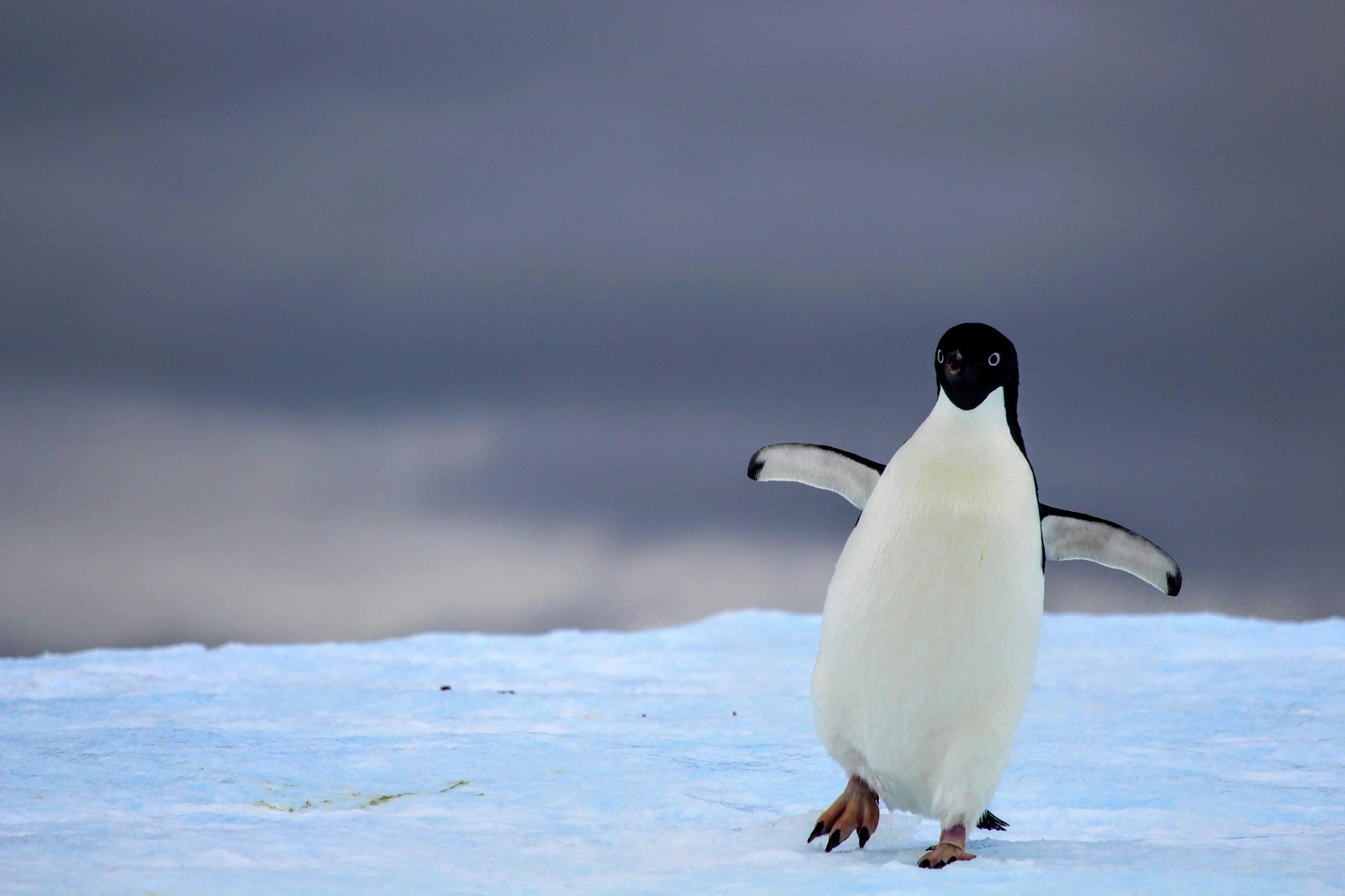
Roy Rashti/Unsplash
Predominantly found in the southern hemisphere, penguins are flightless birds which spend up to 75% of their life in the water. Contrary to popular belief, penguins don’t just live in the Antarctic (only the Adélie and emperor penguins live there exclusively) but are spread out in a variety of environments. While Adélie and emperor penguins face temperatures of down to -60°C, the Humboldt penguin lives in temperatures of up to 21°C on the shores of the Atacama Desert in Chile and Peru. There are 18 different species worldwide, with 67% of all penguins currently experiencing population declines and nine species included on the IUCN Red List. Loss of habitat through climate change, disease, and reduced fish supply, caused particularly by overfishing in the Southern Ocean, are the greatest threats to penguin populations.
Varying in size, the largest penguin is the emperor penguin at about 1.35 metres and 35 kg, the smallest the fairy penguin at 30cm and 1.2 kg. Penguins’ bodies are designed for the water: their wings act as flippers, useless for flight but perfect for water, and their legs and feet act as streamlined rudders, enabling them to swim to considerable depths and over great distances while their plumage holds a layer of air both for buoyancy and insulation in cold water. Penguins usually keep within 1 or 2 metres of the surface, skimming across the water with leaps, a technique called purpoising, which allows them to move quickly through the water and breathe at the surface. They generally dive to depths of up to 18 metres for prey, feeding on krill, fish and squid.
Penguins lay their eggs and raise their chicks on land. The parents (who usually remain together and mate for many years) take it in turns to keep the one or two eggs warm and later to feed and protect the chicks.