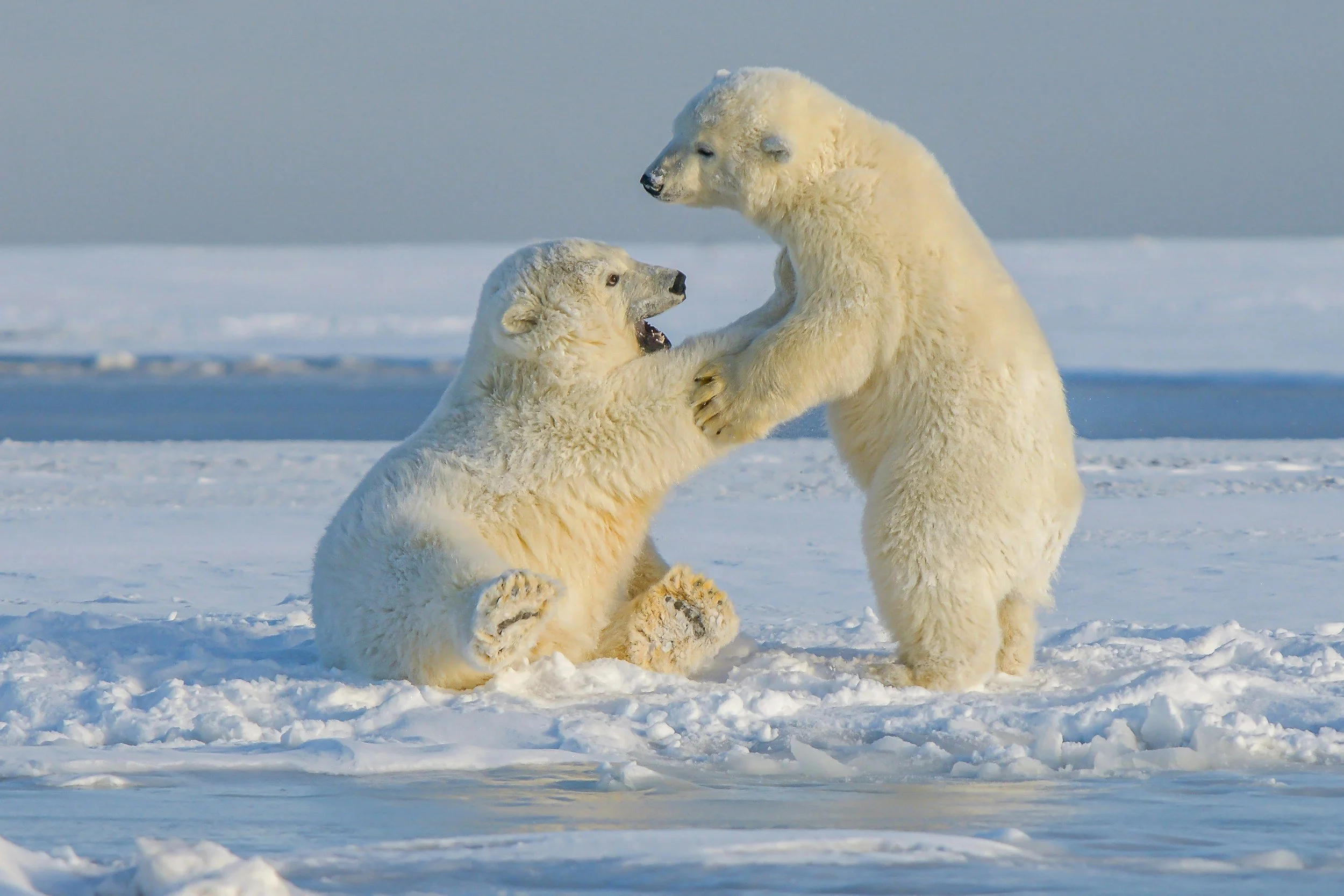
polar bears
Hans-Jurgen Mager/Unsplash
The sea bear (Ursus maritimus) is the largest bear on the planet, reaching up to 3 metres when standing on their hind legs and weighing up to 600 kg. Polar bears are native to just 5 Arctic States: Canada, the United States, Russia, Norway, and Greenland, with approximately two-thirds of the global number (estimated at between 25,000 and 31,000) in Canada. They can travel upwards of 3,000 km a month and swim at a pace of six miles per hour by paddling with their front paws and using their hind legs as rudders. They can live for up to 30 years, their diet consists mainly of seals, providing the necessary fat needed for them to survive. Polar bear cubs are just 30-35 centimetres in length and weigh little more than 0.5. kg, they are blind, toothless, and covered with short, soft fur, completely dependent on the mother to feed them, staying with her for about two and a half years.
Polar bears rely heavily on sea ice for travelling, hunting, resting and mating. With climate change causing rising tepmeratures and the consequent loss of sea ice habitats, polar bears are spending longer periods on land, ofen coming into closer contact with humans. Further threats are posed by an increase in activities such as oil and gas extraction and industrial activities in the Arctic, increasing the risk of exposure to pollutants and toxic substances. Internationally, they are listed as a vulnerable species by the IUCN.
dive in deeper
Polar Bear Specialist Group of the IUCN Species Survival Commission